
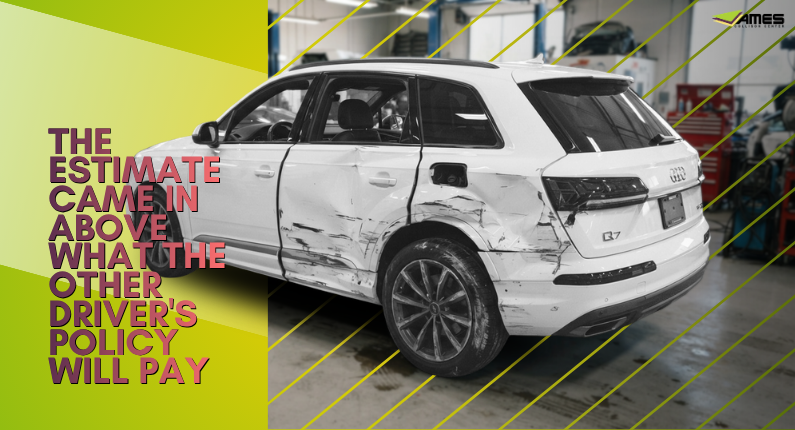
A rear quarter and a rear door on an Audi Q7, hit in a parking structure by a driver who stopped and did everything right. That job arrives at a Dallas body shop regularly, and it often arrives with the same complication attached: the at-fault driver carried the state minimum, the estimate lands above the property damage limit, and somebody has to answer the question of who covers the gap.
Texas law requires at least 30,000 dollars of coverage for injuries per person, up to 60,000 per accident, and 25,000 for property damage — the Texas Department of Insurance calls it 30/60/25. That 25,000 figure is the one that matters to a body shop, and on a late-model European vehicle it is not a large number.
Why European repairs reach the limit faster
The parts are the first reason. A headlamp assembly with adaptive hardware, a bumper cover carrying radar and ultrasonic sensors, an aluminum fender panel — a single corner impact can involve all three, and none of them price like the equivalent part on a mainstream sedan.
The second reason is the labor behind them. Bonded panels, rivets and dedicated fixtures take time that a quick visual estimate never accounts for, and sensors that were disturbed have to be addressed before the car goes back on the road. Hours accumulate before any paint is sprayed.
What the limit actually caps
Property damage liability covers damage the at-fault driver did to other people’s property, and 25,000 is the ceiling for everything in that claim. Your vehicle is the obvious item. It is not necessarily the only one.
If the same collision damaged a second car, a fence or a storefront, those claims draw from the same pool. A customer who assumes the full 25,000 is reserved for their vehicle can find out otherwise weeks later, after repairs have started.
Where the rest of the money comes from
Three places, in the order they usually get used. Your own collision coverage, if you carry it, pays for your vehicle’s repair regardless of fault, and your insurer then pursues the at-fault carrier for what it can recover. Your deductible applies and is often refunded if that recovery succeeds.
Uninsured and underinsured motorist coverage is the second, and it is the line to check on your own policy tonight. It pays when you are hit by someone who had no insurance or not enough of it, Texas insurers have to offer it, and a driver who does not want it has to decline it in writing. Plenty of people did exactly that years ago and have forgotten.
Third is pursuing the at-fault driver personally for the balance. Courts handle that one, and your own carrier should weigh in before you count on it.
What a shop can and cannot do about it
We write what the repair takes, based on the damage in front of us and on new OEM parts that meet or exceed factory specifications for your vehicle. The estimate reflects that, and it does not move because a policy is small.
What we cannot do is make a policy bigger. Where we can help is in making sure nothing is missed or guessed at, because an estimate that understates the job leads to a supplement halfway through and a conversation about money that should have happened at the start.
The questions to ask before you agree to anything
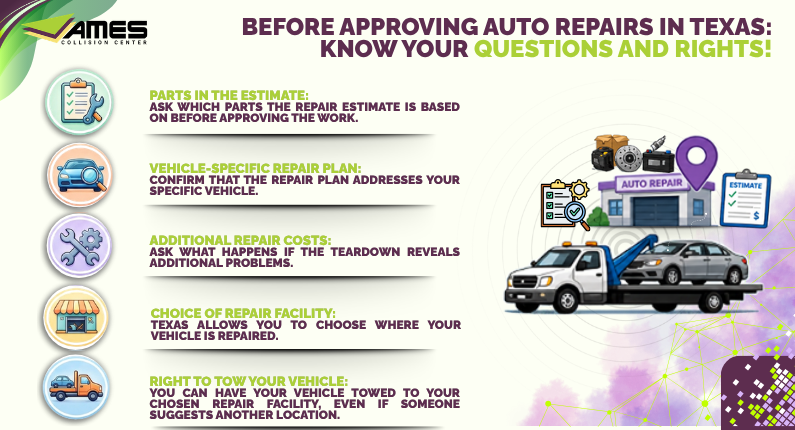
Three of them do most of the work, and all three are better asked on day one than discovered in week three. Ask which parts the estimate is written around, ask what the repair plan says about your specific vehicle, and ask what happens if the teardown finds more. Those three questions surface most of the problems before they become arguments.
Texas also gives you rights here that people do not always know they have. You choose where your vehicle is repaired, and you can have it towed to the facility you picked, even after someone has steered you somewhere else.
Winter in DFW makes this more common
Holiday traffic volume, early darkness and the occasional ice event all push the collision rate up between late November and January. More collisions means more encounters with minimum-limits policies, and more owners finding out what their own declarations page actually says.
Read yours before you need it. Find two lines: the property damage limit you carry, and whether you have underinsured motorist coverage at all.
Frequently Asked Questions
Q: What is the minimum auto insurance required in Texas?
A: Thirty thousand dollars per injured person, sixty thousand per accident, and twenty-five thousand for property damage, which the Texas Department of Insurance refers to as 30/60/25.
Q: Who pays if the repair costs more than the other driver’s coverage?
A: Your own collision coverage or underinsured motorist property damage coverage, if you carry either. Beyond that, the balance is a claim against the at-fault driver.
Q: What does uninsured and underinsured motorist coverage do in Texas?
A: It pays when the driver who hit you had no insurance or not enough of it to cover your repair and medical bills. Texas insurers have to offer it, and declining it has to be done in writing.
Q: Does a bigger repair bill mean my car will be totaled?
A: Not automatically. A total loss decision compares the repair cost to the vehicle’s value, not to the policy limit, so a repair can exceed the other driver’s coverage and still be the right call.
We Write the Estimate the Repair Actually Needs
Ames Collision Center is at 1912 W Mockingbird Ln in Dallas, working on European makes and general makes alike, and you can see the services and brands we handle at amescollisioncenter.com.
